
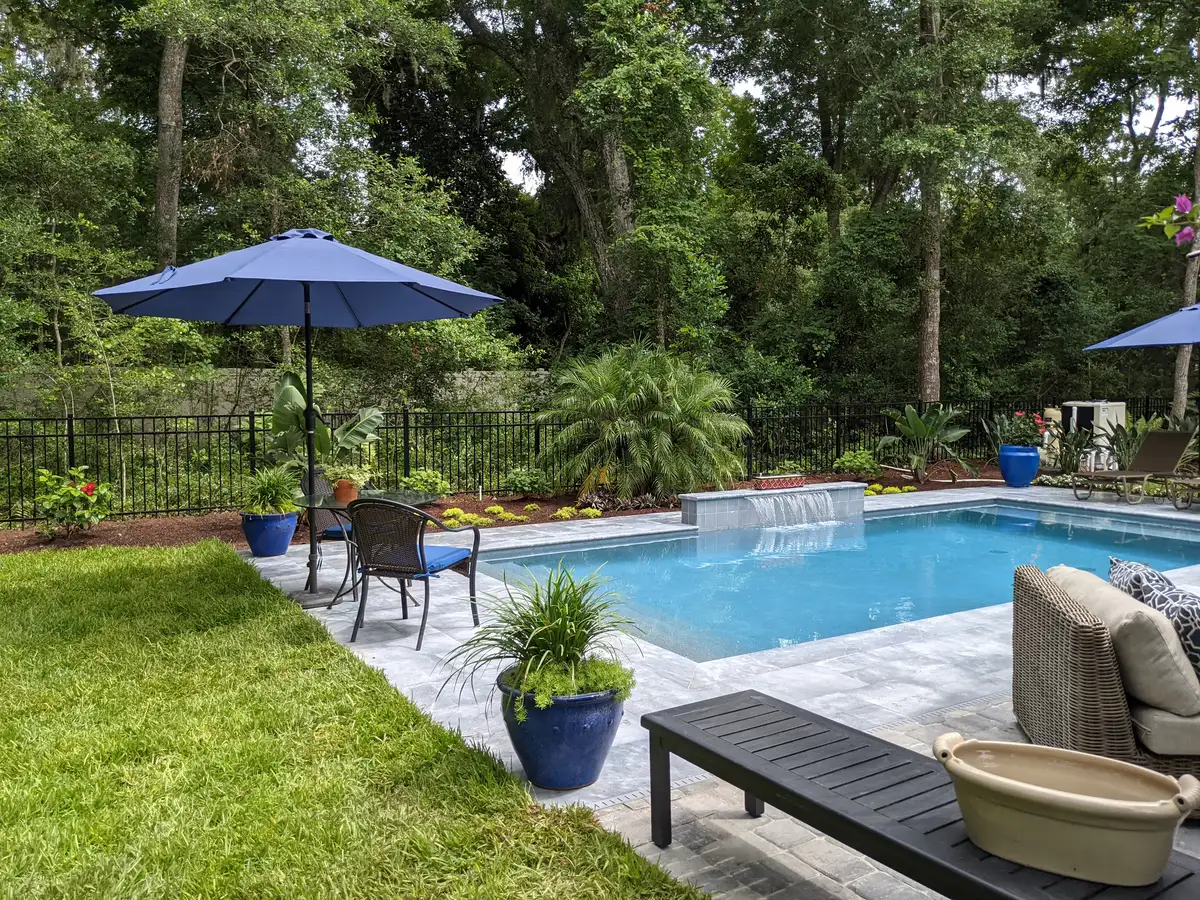
Summer in Northeast Florida does not arrive gradually. By mid-May, afternoon temperatures in Fernandina Beach and across Amelia Island regularly push past 90 degrees, humidity settles in like a permanent houseguest, and the afternoon thunderstorms that define our wet season begin their daily rehearsals. The outdoor living spaces that performed beautifully through a mild coastal spring now face five months of intense heat, driving rain, salt-laden air, and UV exposure that tests every material, every joint, and every plant in the landscape.
The good news is that a well-designed outdoor space in our climate is built for exactly these conditions. But even the most thoughtfully constructed patio, fire feature, or planting bed benefits from seasonal attention. Late April and early May represent the ideal window for this work. The weather is still cooperative for hands-and-knees tasks, nurseries are fully stocked with summer-ready plants, and addressing small issues now prevents them from becoming expensive problems by August.
What follows is the approach we recommend to our clients across Fernandina Beach, Yulee, Ponte Vedra, and Jacksonville for transitioning their outdoor spaces from spring comfort into summer resilience.
Inspect and Clean Your Stone Surfaces
Natural stone patios and walkways are among the most durable elements in any landscape, but Northeast Florida's combination of humidity, organic debris, and occasional tidal salt can leave surfaces looking tired after the cooler months. Before summer entertaining begins, a thorough inspection and cleaning sets the stage for the season.
What to Look For
Walk your patio, walkways, and any hardscape surfaces slowly and look for three things. First, check for any stones that have shifted or settled unevenly. Florida's sandy soils can move subtly over winter and spring, particularly in areas near the water table or where irrigation has softened the base material. A single shifted paver is easy to re-set now; left alone through a summer of heavy rain, it can destabilize the stones around it.
Second, examine the joints between stones. Polymeric sand or natural joint material can wash out during spring rains. Gaps in the jointing allow weeds to establish and provide channels for water to erode the base layer beneath the pavers. Refilling joints before the wet season is one of the most cost-effective maintenance tasks you can perform.
Third, look for any organic staining or algae growth. The shaded areas of a patio, particularly under pergolas or near tree canopies, are prone to developing a thin green film of algae during Florida's humid months. This film is not just unsightly. On smooth stone surfaces, it creates a genuine slip hazard when wet.
Cleaning Natural Stone
For travertine, flagstone, and bluestone, a pressure washer set to a moderate 1,500 to 2,000 PSI with a wide fan tip will remove organic buildup without damaging the stone surface. Avoid narrow tips or pressures above 2,500 PSI, which can etch softer stones like travertine and coquina. For stubborn algae stains, a solution of oxygen bleach (sodium percarbonate) and water applied before pressure washing is effective and safe for surrounding plantings. Avoid chlorine bleach, which can discolor natural stone and kill beneficial soil organisms in adjacent planting beds.
If your stone was sealed previously, late spring is the ideal time to assess whether resealing is needed. A simple water test tells the story: pour a small amount of water on the stone surface. If it beads up, the existing sealer is still performing. If it soaks in within a few seconds, the sealer has worn through and a fresh coat will protect the stone from summer staining and make cleaning easier throughout the season.
Prepare Your Plantings for Summer Heat
The native and adapted plantings that frame a well-designed landscape in our region are selected specifically for their ability to handle Northeast Florida summers. But the transition from spring's moderate conditions to summer's extremes is the most stressful period for plant material, and a few proactive steps make a meaningful difference in how your landscape looks by September.
Mulch Before the Heat Arrives
If there is one task that delivers the greatest return on effort, it is refreshing your mulch layer before summer. A two-to-three-inch layer of natural hardwood mulch or pine straw insulates root zones from temperature extremes, retains soil moisture between rains, suppresses weed germination, and feeds the soil biology as it decomposes. In Amelia Island's sandy soils, which drain quickly and heat up rapidly, mulch is not optional. It is the difference between plants that thrive and plants that merely survive.
Apply mulch now, before the wet season begins in earnest. Mulch applied during heavy rain periods can hold too much moisture against stems and crowns, promoting fungal issues. A dry application in late April gives the mulch time to settle before the daily afternoon storms begin.
Prune Strategically
Late April is the last good window for significant pruning before summer growth accelerates. Remove any dead or damaged branches from ornamental trees and shrubs. Shape hedges and screening plants to encourage dense summer growth. For flowering shrubs that bloom on new wood, such as firebush, plumbago, and butterfly bush, a moderate cutback now will produce a flush of new growth and flowers by June.
Do not prune spring-flowering plants like azaleas, loropetalum, or Indian hawthorn after they have finished blooming. They are already setting next year's flower buds. Pruning them now removes the blooms you would enjoy next spring.
Adjust Irrigation
Most irrigation systems in Nassau County are still running on their spring schedule, which typically provides one to two watering days per week. As temperatures rise and evapotranspiration increases, your landscape will need more water, but the timing matters as much as the volume. The most effective summer irrigation schedule for Northeast Florida runs between 4:00 and 8:00 AM, when wind is calm, temperatures are cool, and water has time to soak into root zones before the heat of the day causes surface evaporation.
Check every irrigation zone for broken heads, clogged emitters, and misaligned spray patterns. A single broken head running unnoticed can waste hundreds of gallons per week and create saturated areas that promote root rot and fungal disease. Most irrigation issues are simple to identify now but invisible once summer plant growth conceals them.
Service Your Fire Features
It may seem counterintuitive to think about fire features as summer approaches, but in our climate, fire pits and fireplaces see year-round use. Evenings on Amelia Island remain comfortable for outdoor dining and gathering well into summer, and a fire feature extends the usable evening hours even when mosquito pressure rises. The maritime breeze off the Atlantic that defines Fernandina Beach evenings keeps conditions pleasant around a fire long after inland areas have retreated indoors.
Gas Fire Features
For gas fire pits and fire tables, inspect the burner assembly for any debris, spider webs, or corrosion that accumulated during months of disuse or light use. Spiders are particularly attracted to the mercaptan odorant in natural gas and propane and frequently build webs inside burner ports, which can cause uneven flames or prevent ignition. A compressed air blowout of the burner ports resolves most ignition issues.
Check all gas connections for leaks using a soapy water solution applied to fittings and hose connections. Bubbles indicate a leak that needs attention before the feature is used. Inspect fire glass or lava rock media for discoloration or cracking and replace any pieces that have deteriorated.
Wood-Burning Fire Pits
Remove all ash from the firebox and inspect the interior stone or liner for cracks. The extreme temperature cycling of a wood fire can stress natural stone over time, and hairline cracks caught early are easy to repair. Check the surrounding stone cap and seating walls for any mortar that has loosened or crumbled, and re-point any open joints before moisture penetration can cause further damage during summer's heavy rains.
Check Your Landscape Lighting
Summer's longer days mean your landscape lighting activates later in the evening, but it also means you are spending more of those evening hours outdoors and relying on your lighting to define the space, provide safety along paths, and create the ambiance that makes summer evenings on the coast feel like a permanent vacation.
Fixture Audit
Walk your property after dark and check every fixture. Note any bulbs that have failed, any fixtures that have been knocked out of alignment by lawn maintenance or foot traffic, and any areas where plant growth has obscured a fixture or blocked its beam. Spring and early summer growth in Northeast Florida is explosive, and a fixture that was perfectly aimed in March may be completely buried in muhly grass or society garlic by late April.
Clean lens covers on all fixtures. Salt air deposits a film on glass and polycarbonate lenses over time that dims output noticeably. A soft cloth and mild glass cleaner restore full brightness. For fixtures in the ground near irrigation zones, check that water is not pooling around the base, which can shorten fixture life even on marine-rated units.
Update Your Lighting Schedule
If your system runs on a standard timer rather than an astronomical clock, update the on-time to match the later sunset. In Fernandina Beach, sunset shifts from approximately 7:45 PM in late April to 8:30 PM by late June. A lighting system that activates at 7:00 PM in April wastes energy running in full daylight by June. Astronomical timers handle this automatically, adjusting each night based on calculated sunset for your latitude. If you do not yet have one, the upgrade is straightforward and worth the investment.
Prepare Drainage for the Wet Season
Northeast Florida receives roughly 60 percent of its annual rainfall between June and September. For outdoor living spaces, this means every drainage system, every swale, and every channel grate needs to be clear and functional before the wet season arrives.
Walk the perimeter of your patio and note where water flows during a rain event. Clear any leaf debris from channel drains and catch basins. Check that downspouts from any pergola or pavilion structures are directing water away from stone surfaces and planting beds, not toward them. In flat terrain, which describes most of Nassau County, even a slight grading issue can turn a patio edge into a seasonal pond.
If you notice areas where water consistently pools on or near your hardscape after rain, this is worth addressing now rather than tolerating for another summer. Standing water degrades joint material, encourages algae growth, provides mosquito breeding habitat, and can undermine the aggregate base beneath your pavers over time. Often, the solution is as simple as re-grading a small section of adjacent lawn or adding a French drain to redirect subsurface water.
Protect Outdoor Furniture and Fabrics
The stone, plants, and lighting of your outdoor living space are designed to be permanent features of the landscape. But the furnishings that make those spaces comfortable are more vulnerable to summer's combination of UV radiation, humidity, mildew, and driving rain.
If your outdoor cushions and pillows spent the winter outdoors, inspect them for mildew. Wash fabric covers in a solution of oxygen bleach and warm water before summer use begins. Apply a fabric protectant spray rated for outdoor use to extend the life of the fabric and make future cleaning easier.
For teak, aluminum, and wrought iron furniture frames, a seasonal cleaning and inspection for loose hardware keeps pieces safe and attractive. Teak can be left to weather naturally to a silver-gray patina or maintained with teak oil for a warmer tone. Either approach is valid, but mixing the two on the same piece produces an uneven appearance.
Consider investing in quality furniture covers for periods of extended absence. Even UV-resistant outdoor fabrics degrade faster under constant Florida sun exposure. Covering furniture when not in use for a week or more extends fabric life significantly.
The Late April Advantage
The reason we encourage our clients to address these tasks now, in late April, rather than waiting until Memorial Day weekend, is that every item on this list becomes more difficult and less effective once summer conditions are fully established. Sealing stone in 95-degree heat produces inferior results. Transplanting or dividing perennials in July stresses plants that are already managing heat and humidity. Cleaning irrigation heads in August means weeks of water waste have already occurred.
Late April in Fernandina Beach and across Nassau County offers comfortable working conditions, good nursery availability, and enough time for any repairs, plantings, or adjustments to establish before the real heat arrives. It is the sweet spot between spring's gentle farewell and summer's emphatic entrance.
If your outdoor living space needs more than seasonal maintenance, if you have been thinking about adding a fire feature, extending a patio, installing landscape lighting, or reimagining the entire backyard, this is also the ideal time to begin the design conversation. Projects designed in spring can be installed through early summer and ready for enjoyment by the time the longest days of the year arrive.
We welcome the opportunity to walk your property, assess your outdoor space, and help you determine what it needs to be at its best this summer and for many summers to come.