
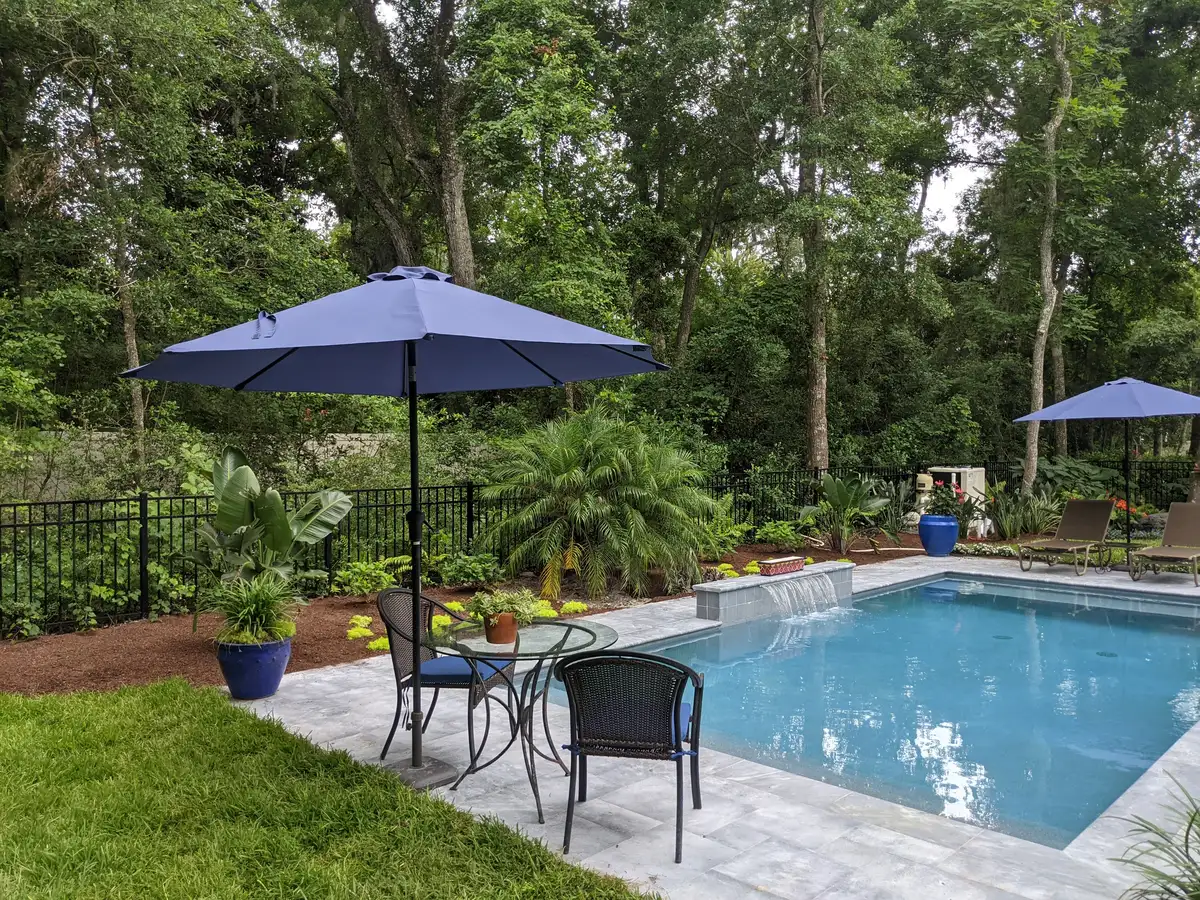
The honest answer is that patio size is only the beginning of the price. A complete paver patio quote covers the surface you see and the preparation below it: excavation, a stable base, grading, drainage, edges, access, cuts, cleanup, and the transitions back into the landscape.
That is why two patios with the same square footage can have very different totals. For homeowners considering a paver patio in Fernandina Beach, the most useful budget conversation starts with the property and a clearly defined scope—not a national square-foot average.
What goes into a complete paver patio price?
Think of the estimate as six connected parts. Each one affects both the budget and how the finished patio performs.
- Finished size and shape. More square footage requires more material and labor, but curves, borders, narrow sections, and diagonal patterns can also add cuts and installation time.
- Paver or stone selection. Unit price, thickness, finish, pattern, availability, freight, and the amount of cutting or waste all matter. A material comparison should include the complete installed assembly, not just the pallet price.
- Removal and site preparation. Existing concrete, roots, unsuitable soil, old landscape materials, and limited excavation space can change the amount of work before the base begins.
- Base, grade, and drainage. Preparation must respond to the soil, expected use, thresholds, downspouts, low areas, and where runoff can safely move.
- Access and logistics. A wide, direct route to the work area is different from moving materials through a narrow side yard or protecting established planting along the way.
- Edges and connected features. Steps, seat walls, fire features, lighting sleeves, drains, planting beds, and repairs around the new patio can expand the scope beyond the paver field.
A proposal is easier to evaluate when these parts are named. If the quote shows only one total, ask what is included for demolition, disposal, base preparation, drainage work, edge restraint, joint material, restoration, and any required approvals.
How much would a 20-by-20-foot paver patio cost?
A 20-by-20-foot patio has 400 square feet of finished surface. That measurement is useful, but multiplying 400 by a generic online price can miss the work that makes the surface usable. It also may not account for cuts and waste, steps, borders, edge restraint, delivery, or repairs where the new patio meets lawn and planting.
For a meaningful estimate, define what the 400 square feet needs to hold. A dining table, circulation around chairs, a grill with safe working room, or a future fire feature can change the layout. Then confirm the selected material, pattern, access route, door thresholds, runoff, and site preparation. Those details turn a rough dimension into a buildable scope.
Ask for these items in the estimate
- Patio dimensions, shape, pattern, and named paver or stone
- Removal, excavation, haul-away, and protection of existing features
- Base, bedding, edge restraint, joint material, and finish grade
- Drainage work and the intended direction of runoff
- Steps, borders, walls, utility sleeves, or other connected details
- Cleanup, surrounding restoration, exclusions, and change-order process
Why drainage and base preparation deserve budget priority
Fernandina Beach properties can combine sandy soil, strong seasonal rain, mature roots, roof runoff, and low spots. The same conditions that make outdoor spaces lush can expose weak preparation. Water that ponds beside a door, washes material from an edge, or crosses a walking path is not a finish-color problem.
Before choosing the surface, note where water collects after heavy rain, where downspouts discharge, and how the proposed patio relates to neighboring grades. The City of Fernandina Beach publishes stormwater guidance that reinforces the importance of managing runoff. Property-specific permit, drainage, easement, or association requirements should be confirmed before construction rather than assumed from a general article.
The Fernandina Beach service area page explains more of the coastal site context that can shape landscape and hardscape planning. If the patio is part of a larger yard change, it may be more efficient to coordinate circulation, planting, lighting, drainage, and future features in one plan.
Where can the design simplify cost without weakening the patio?
Simplification is different from removing structural work. A clean rectangle generally needs fewer intricate cuts than a footprint with many small curves and corners. A restrained pattern may install more efficiently than a layout with multiple inlays and borders. Choosing an available material early can also reduce the risk of redesigning around a late substitution.
Do not treat excavation, the base, finished grade, drainage, edge restraint, or safe transitions at doors and steps as decorative upgrades. Those details support the surface. If the initial concept exceeds the budget, consider a smaller but well-proportioned patio, fewer masonry add-ons, or a plan that allows planting, lighting, or a fire feature to be added later without undoing finished work.
What long-term costs should be part of the decision?
Pavers are a jointed surface. Leaves, soil, spills, moisture, and sun exposure all affect care. Routine sweeping and prompt stain cleanup are modest tasks, but joints may eventually need attention and localized movement should be addressed before it spreads. Sealer, if appropriate for the specific material and desired appearance, is another product and maintenance decision—not an automatic requirement for every patio.
Pressure washing deserves restraint. Start with the least aggressive suitable cleaning method and follow the paver or sealer manufacturer's instructions. High pressure held too close can mar a surface or remove joint material. Test a small area, use an appropriate fan pattern, and plan to restore joint material if cleaning displaces it.
Pavers can also be repaired differently from a monolithic slab: an individual area can often be lifted and reset when a localized issue is accessible. That does not make preparation unimportant; it means the system can offer a practical repair path when roots, utilities, or settlement affect one area.
Compare the Whole ScopeHow to compare paver patio estimates fairly
First, make sure every proposal describes the same finished area and material. Then compare what happens below and around it. One quote may include demolition, disposal, drainage details, substantial base preparation, borders, cleanup, and landscape restoration while another excludes several of those items.
Ask how unknown conditions will be handled, who confirms applicable approvals, what material substitutions are allowed, and how added work is authorized. A low total with an unclear scope is difficult to compare with a complete proposal. The strongest estimate is not necessarily the longest document, but it should make the work, exclusions, and decisions understandable.
Planning a patio budget?
Bring approximate dimensions, photos of the space after rain, the furniture or features the patio must hold, and any survey or association guidance you already have. Bloom and Stone can use that context to discuss the design and the next steps for your property.
Call (904) 206-7876 or request a consultation through the contact page.
Paver patio cost and care questions
A 20-by-20-foot patio has 400 square feet of finished area, but size alone does not produce a reliable installed price. Material, cuts and pattern, excavation, base depth, drainage, access, edge restraint, removal, and adjacent features all affect the total. Ask for a written, site-specific estimate that identifies those items rather than multiplying 400 by a material-only price.
Pavers have joints that need care, and individual units can settle or shift when the base, drainage, or edge restraint is inadequate. Debris and moisture in joints can also support weeds or biological growth. Thoughtful preparation and routine maintenance help manage these tradeoffs.
There is no single lifespan for every patio. Long-term performance depends on the paver or stone, base preparation, drainage, edge stability, traffic, tree roots, and maintenance. One advantage of a segmental surface is that individual units can often be lifted and reset if a localized area moves.
Pressure washing can clean some paver surfaces, but aggressive pressure or a narrow nozzle can damage the surface and remove joint material. Start with the least aggressive suitable method, follow the paver or sealer manufacturer's care guidance, test a small area, and replace joint material if cleaning displaces it.
Do not treat excavation, base preparation, grading, drainage, edge restraint, or safe transitions at doors and steps as optional finish upgrades. A simpler shape or a different paver can reduce visible complexity without removing work that supports the patio.