
Naturalistic landscape design looks relaxed because the structure is deliberate
Naturalistic landscape design uses layered planting, repeated forms, seasonal change, and materials that suit the setting to create a garden that feels connected to its surroundings. It is not an untended yard. Paths, edges, sightlines, plant spacing, and focal points give the composition order while plants soften that framework over time.
In Northeast Florida, that structure should respond to each yard's real conditions: sandy soil, strong sun or mature-tree shade, seasonal rain, roof runoff, salt and wind exposure near the coast, and the way you move between the house and outdoor areas.
For homeowners in Fernandina Beach, Amelia Island, Yulee, Jacksonville, Ponte Vedra, and Wildlight, this approach offers an alternative to rows of isolated shrubs and rigid beds. The aim is a composed landscape that feels settled into the region—not a copy of wild vegetation and not a one-size-fits-all native plant list.
Four principles that make a naturalistic garden feel intentional
Naturalistic landscape design draws from the ecology of a region to create compositions that look effortless but are, in fact, carefully considered. Every plant is chosen for how it relates to its neighbors, to the soil, and to the light patterns of the site. The goal is not wilderness. It is a curated expression of the natural world.
Several principles define this approach:
- Plant communities over specimen planting. Rather than dotting individual plants across a bed, naturalistic design groups species that naturally grow together, creating dense, layered compositions that support one another.
- Seasonal rhythm. The garden changes through the year. Spring wildflowers give way to summer grasses, fall seed heads catch the light, and winter structure holds the composition together.
- Useful planting. Plants can do more than decorate a bed. Depending on the species and placement, they may soften stonework, define a path, hold an edge, add shade, or support birds and pollinators.
- Maintenance by design. Mature size, spacing, irrigation reach, leaf drop, pruning access, and seasonal cleanup are considered before planting. That can reduce avoidable work, but it does not make the garden maintenance-free.
Plant choices for a layered Northeast Florida landscape
The success of naturalistic design hinges on choosing plants for the conditions actually present in your yard. Sun, moisture, drainage, salt exposure, available space, and mature plant size matter more than a generic regional list. The plants below are useful starting points for discussion, not a promise that every species fits every Northeast Florida property.
Grasses and Groundcovers
- Muhly grass (Muhlenbergia capillaris) produces ethereal pink plumes in autumn and thrives in full sun on sandy, well-drained soil. It is one of the signature plants of naturalistic design in our region.
- Fakahatchee grass (Tripsacum dactyloides) forms graceful, arching clumps and tolerates both dry and seasonally wet conditions.
- Sunshine mimosa (Mimosa strigillosa) is a low-growing, nitrogen-fixing groundcover with small pink flowers. It handles foot traffic and thrives in sandy soils.
- Beach sunflower (Helianthus debilis) spreads quickly along coastal sites, offering bright yellow blooms and excellent salt tolerance.
Shrubs and Mid-Layer Plants
- Beautyberry (Callicarpa americana) is grown for its vivid magenta fruit clusters in fall, a striking accent in naturalistic plantings and a vital food source for migrating birds.
- Firebush (Hamelia patens) blooms prolifically from spring through fall with tubular red-orange flowers that draw hummingbirds and butterflies.
- Coontie (Zamia integrifolia) is Florida's only native cycad, providing evergreen texture in shade or sun and serving as the sole larval host for the rare atala butterfly.
- Saw palmetto (Serenoa repens) adds dramatic, fan-shaped structure and tolerates the most challenging conditions: drought, salt, poor soil, and neglect.
- Walter's viburnum (Viburnum obovatum) offers dense evergreen foliage, spring flowers, and dark berries for wildlife, and it shears well if structure is needed.
Canopy and Accent Trees
- Live oak (Quercus virginiana) is the defining tree of Northeast Florida's landscape, with spreading canopy and extraordinary wind resistance.
- Dahoon holly (Ilex cassine) provides year-round green and bright red berries in winter, tolerating wet soils that many other trees cannot.
- Southern red cedar (Juniperus virginiana var. silicicola) thrives on sandy dunes and coastal sites, offering dense, columnar structure and a distinctive silvery color.
How Northeast Florida site conditions shape the plan
A regional climate label is only a starting point. Two homes a few miles apart can have very different planting conditions because of ocean exposure, tree canopy, reflected heat, roof drainage, irrigation coverage, and low areas that hold water after a storm.
- Start with water movement. Note standing water, roof runoff, eroded edges, and the direction water travels before deciding where beds, paths, patios, or retaining edges belong.
- Map sun and shade. Observe the yard during the brightest part of the day and account for seasonal shade from live oaks and other mature trees.
- Separate coastal exposure from inland conditions. Salt and wind exposure can change quickly with distance, orientation, fencing, buildings, and existing vegetation.
- Plan for mature growth. A naturalistic bed may be densely composed, but plants still need spacing that respects their mature width, access needs, and relationship to paths and structures.
If drainage or permitting is a concern, treat that as a site-planning question before selecting a plant palette. The City of Fernandina Beach maintains public stormwater guidance, and neighborhood or HOA review may also affect hardscape, grading, or visible front-yard changes.
Naturalistic and formal landscapes solve different design goals
The difference between naturalistic and traditional landscaping is not simply a matter of plant selection. It is a fundamentally different relationship with the land.
| Factor | Traditional Landscaping | Naturalistic Design |
|---|---|---|
| Plant selection | Often selected for uniform shape, color, and repetition | Selected for site fit, texture, seasonal change, and relationships within the planting |
| Layout | Formal, symmetrical, geometric beds | Organic, flowing, layered compositions |
| Irrigation | Depends on plant palette and site | Depends on plant palette, establishment needs, and site |
| Maintenance | May emphasize regular shearing, edging, and lawn care | May emphasize establishment care, weeding, seasonal editing, and selective pruning |
| Wildlife value | Varies with the plants and management approach | Can support habitat when appropriate species are included |
| Seasonal interest | Often peaks once per year | Evolves through all four seasons |
| Water usage | Varies with lawn area, plant choice, irrigation, and exposure | Can be reduced when plants are matched to moisture conditions and irrigation is planned carefully |
Traditional landscaping is not wrong. Many homeowners love the tidy precision of clipped hedges and annual color beds. But for those drawn to something more organic, something that connects their property to the larger ecology of Northeast Florida, naturalistic design offers a deeply satisfying alternative.
3D design makes plant scale and hardscape relationships easier to evaluate
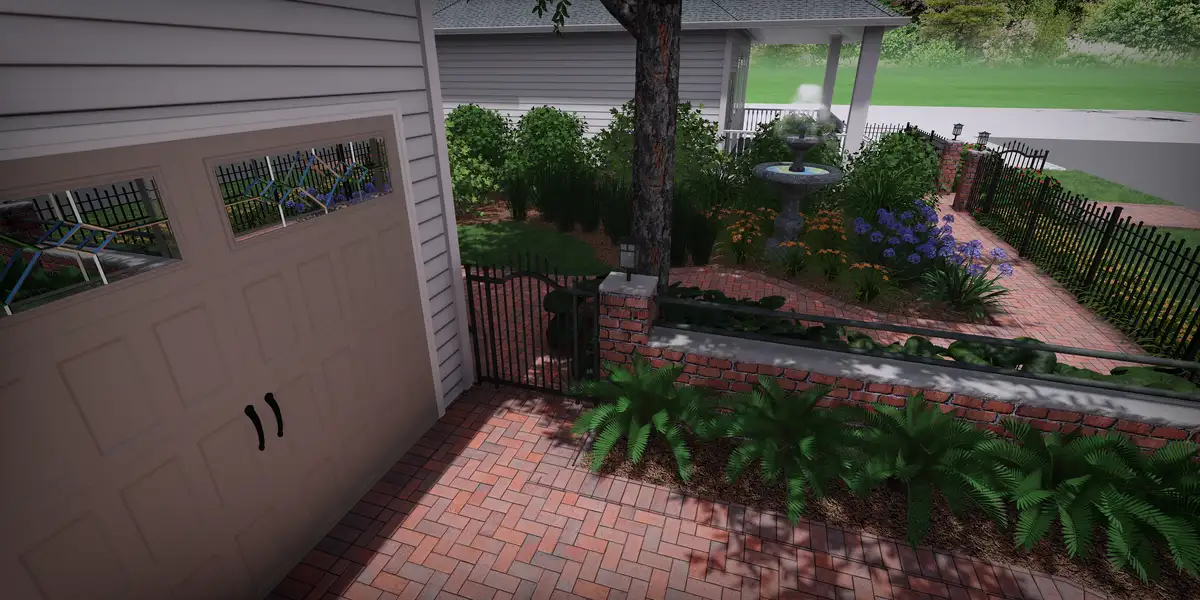
One of the challenges of naturalistic design is that it can be difficult to visualize before it is planted. Unlike a formal garden where hedges form clear lines and beds follow predictable shapes, naturalistic compositions depend on the interplay of textures, heights, and densities that only become apparent once mature.
This is where Bloom and Stone's 3D design and naturalistic landscaping service can help. A three-dimensional view can show how a stone path moves through layered planting, how a seating area relates to the house, or where a focal tree changes the view from indoors.
3D views can also make scale easier to discuss before installation. They help you compare bed depth, path width, patio size, planting height, and the transitions among hardscaping, lighting, water, and planting. Plant growth is still living and variable; the value of the model is clarifying the intended composition and the decisions that support it.
What homeowners can gain from a site-matched naturalistic plan
The practical advantages of naturalistic landscaping are as compelling as its beauty:
- A garden with depth. Groundcovers, grasses, shrubs, and trees create foreground, middle ground, and canopy instead of a single row of foundation plants.
- Clearer maintenance choices. The plan can reduce awkward lawn fragments and unnecessary shearing while setting realistic expectations for watering, weeding, pruning, and seasonal cleanup.
- More seasonal interest. Foliage, flowers, seed heads, berries, bark, and plant form can carry the composition through different parts of the year.
- Better connection between features. Planting can soften patio edges, guide movement, frame a water or fire feature, and help outdoor living areas feel integrated with the yard.
- A plan grounded in the site. Existing trees, drainage, exposure, views, and daily circulation become design inputs instead of obstacles discovered after work begins.
Start with the yard you have—not a finished plant list
The best naturalistic landscapes begin with a careful reading of the site. What is the soil? How does water move across the property? Where does the wind come from? What trees already exist, and how do they shape the light? These questions matter more than any trend or plant list.
Bloom and Stone's landscape design service brings planting, patios, stonework, drainage, lighting, and outdoor living into one coordinated plan. For coastal planning detail, review the Fernandina Beach landscape design guide. If you are comparing designers or preparing for a first conversation, the 10 questions to ask before booking landscape design covers scope, fees, site review, maintenance, and phasing without repeating this design-style guide.
If you are considering naturalistic landscape design for your Amelia Island, Jacksonville, or Northeast Florida home, start with a conversation about how you use the yard, what is not working, and how much ongoing care feels realistic. You do not need to arrive with a finished drawing or a complete plant list.
A successful naturalistic garden feels settled into its surroundings while still reflecting deliberate choices about circulation, seasonal color, plant spacing, and long-term care.
Continue planning your Northeast Florida landscape
Use the service page for project scope and the local guides for site-specific preparation.
Naturalistic landscape design FAQ
Does a naturalistic landscape have to use only native plants?
No. Native plants can be valuable, but naturalistic design is defined by site-responsive composition rather than a native-only rule. The right palette depends on sun, moisture, salt exposure, mature plant size, and the level of care you want to provide.
What is the rule of three in landscape design?
The rule of three is a composition guide that repeats a plant, material, or form in odd-numbered groupings. It can create rhythm and visual unity, but spacing and group size should still respond to each plant's mature dimensions and the scale of the yard.
Is naturalistic landscape design low maintenance?
It can reduce some repetitive tasks when plants are matched to the site and spaced for mature growth, but no planted landscape is maintenance-free. Establishment watering, weeding, seasonal editing, and occasional pruning still need to be planned.
What plants work well in a Northeast Florida naturalistic landscape?
Possible choices include muhly grass, coontie, beautyberry, beach sunflower, firebush, saw palmetto, and regionally suitable trees. A final plant list should be based on the specific yard's light, drainage, salt and wind exposure, available space, and maintenance goals.