
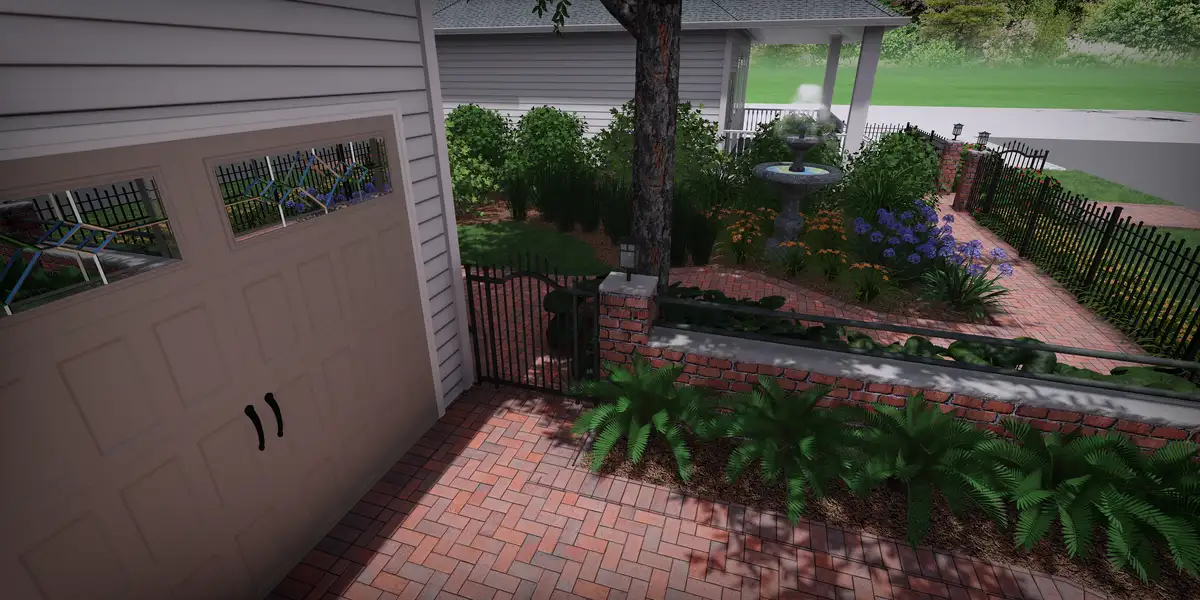
Before a homeowner books a landscape design consultation, the questions are usually practical. Will the design hold up to salt air? Can the yard drain during a hard summer rain? Should the patio come first or the planting plan? Is 3D design worth it? For Fernandina Beach properties, those questions matter because a landscape has to work with barrier island conditions, not just look appealing in a drawing.
Fernandina Beach homeowners tend to ask practical questions before they hire a landscape designer: what the process includes, how coastal conditions affect the plan, what a realistic budget looks like, and how to compare proposals. The answers below focus on the decisions that matter most for Amelia Island and Northeast Florida properties.
1. What should be included in a landscape design consultation?
A useful consultation should do more than collect a wish list. In Fernandina Beach, it should include a walk of the property, notes about sun and shade, drainage observations, existing trees worth preserving, access constraints for installation, and a conversation about how the space will actually be used. A front yard refresh, a full backyard transformation, and a phased outdoor living plan each need different levels of detail.
Homeowners should be ready to discuss priorities: privacy, curb appeal, entertaining, lower water use, shade, maintenance, outdoor dining, fire features, water features, or a better connection between the home and yard. The more honest the conversation is at the beginning, the stronger the finished plan will be.
2. Why is Fernandina Beach different from an inland landscape project?
Fernandina Beach is shaped by coastal exposure. Sandy soils drain quickly and do not hold nutrients the same way heavier inland soils do. Salt spray can damage plants that would look fine in a nursery. Afternoon storms can move a surprising amount of water across a flat lot. Wind patterns change from one side of a property to the other, especially near the ocean, marsh, or Intracoastal Waterway.
That is why local design should begin with the site instead of a template. The plant palette, bed layout, stone selection, and drainage plan all need to respond to the property. A coastal yard may call for muhly grass, coontie, saw palmetto, yaupon holly, wax myrtle, beautyberry, and other native or adapted plants that can handle Northeast Florida conditions with less intervention after establishment.
3. Is 3D landscape design useful before booking installation?
For many homeowners, yes. Bloom and Stone uses 3D renderings to bring immersive, naturalistic landscape designs into view before installation. That matters because outdoor spaces are hard to judge from a flat plan alone. A 3D model can show how a patio relates to a planting bed, how a fire pit fits the seating area, how trees affect shade, and how stone and foliage will feel together.
3D planning is especially useful when the project includes multiple elements, such as hardscaping, a paver patio, planting beds, lighting, and an outdoor gathering area. It gives the homeowner a chance to refine the design before construction begins, which can prevent expensive changes later.
4. Should the planting plan or hardscape plan come first?
The best answer is that they should be planned together. Hardscape gives the yard structure: patios, paths, steps, retaining edges, seat walls, and gathering spaces. Plantings soften those forms, manage views, support pollinators, and help the finished space feel rooted in the land. If either side is planned in isolation, the yard can feel disconnected.
For a Fernandina Beach homeowner considering a patio or fire feature, the hardscape layout should account for drainage, grade, furniture clearance, shade, and how people move from the house into the yard. The planting plan should then reinforce those decisions with layers of texture, screening, seasonal color, and salt-tolerant structure.
5. What should homeowners ask about drainage?
Drainage is one of the most important questions to ask before booking. A beautiful design can fail if water collects against the house, washes mulch into walkways, undermines patio edges, or keeps plant roots saturated. Ask how the designer evaluates the direction water moves, where downspouts discharge, whether low areas need grading, and how patios or walkways will shed water.
On Amelia Island and in Fernandina Beach, drainage decisions often need to balance fast-draining sand with sudden heavy rainfall. A design may include subtle grading, permeable joints, dry creek details, bed shaping, or plant choices that tolerate periodic wet feet without making the yard look engineered.
6. Can the project be phased?
Yes, and many homeowners should ask about phasing early. A phased master plan can make a larger design more manageable without losing the overall vision. Phase one might solve grading, main planting beds, and the primary patio. Phase two might add landscape lighting, a fire pit, or a water feature. Phase three could finish detail plantings, privacy layers, or specialty stonework.
The key is to plan future phases before the first phase starts. That keeps irrigation sleeves, electrical needs, access paths, stone edges, and planting zones from being installed in the wrong place. Good phasing protects the budget and prevents rework.
7. What should a homeowner bring to the first conversation?
Bring photos of the property, a rough list of goals, any HOA or historic district guidelines, a survey if available, and a realistic sense of priorities. Inspiration images can help, but they should be treated as direction, not a literal shopping list. A design that works in another climate may not make sense in Fernandina Beach.
It also helps to think about how the space should feel. Some homeowners want a quiet garden that feels natural and settled. Others want a highly functional outdoor living space for dining and hosting. Some want native planting, less lawn, and better habitat value. The right landscape design translates those goals into a plan that fits the site.
8. How should homeowners compare landscape design proposals?
Compare more than price. Look at whether the proposal explains the design process, site assessment, plant strategy, materials, deliverables, and next steps. Ask whether the plan includes 3D visualization, planting schedules, hardscape materials, drainage thinking, lighting locations, and phase recommendations. A vague proposal may be cheaper at first but harder to manage once installation begins.
Homeowners should also look for specificity. In Fernandina Beach, a proposal that mentions coastal soils, salt exposure, native and adapted plants, shade patterns, drainage, and natural stone materials is more useful than a generic list of plants and square footage.
9. When is the best time to start?
The best time to start is before you are ready to install. Design takes time, and coastal projects can be affected by weather, material availability, permitting questions, HOA review, and planting windows. Starting early gives the designer time to understand the property and gives the homeowner time to make decisions without rushing.
If you want a new outdoor space ready for a specific season, work backward. Allow time for consultation, design, revisions, material decisions, scheduling, installation, and plant establishment. For larger projects, a thoughtful plan is usually worth more than a fast start.
10. What is the next step?
If you are comparing options for landscape design in Fernandina Beach, start with a conversation and a site walk. Bloom and Stone Outdoor Designs LLC designs naturalistic landscapes, custom stonework, patios, water features, lighting, and outdoor living spaces for Fernandina Beach, Amelia Island, Yulee, Wildlight, Jacksonville, and Ponte Vedra homeowners.
To talk through your property, visit the contact page or call (904) 206-7876. A good design conversation should leave you with a clearer sense of what is possible, what needs to be solved first, and how your outdoor space can feel like it belongs to the land around it.
Ask how the designer evaluates salt exposure, sandy soil, drainage, existing trees, outdoor living goals, hardscape materials, maintenance expectations, and whether the plan includes 3D visualization before installation decisions are made.
Fernandina Beach properties often deal with salt air, fast-draining sand, heavy summer rain, wind exposure, shade from live oaks, and HOA or historic district constraints. A local design approach accounts for those conditions before plants and hardscape materials are specified.
Yes. A complete landscape design can coordinate planting beds, paver patios, natural stonework, fire pits, water features, landscape lighting, drainage, and future phases so the outdoor space works as one plan.