
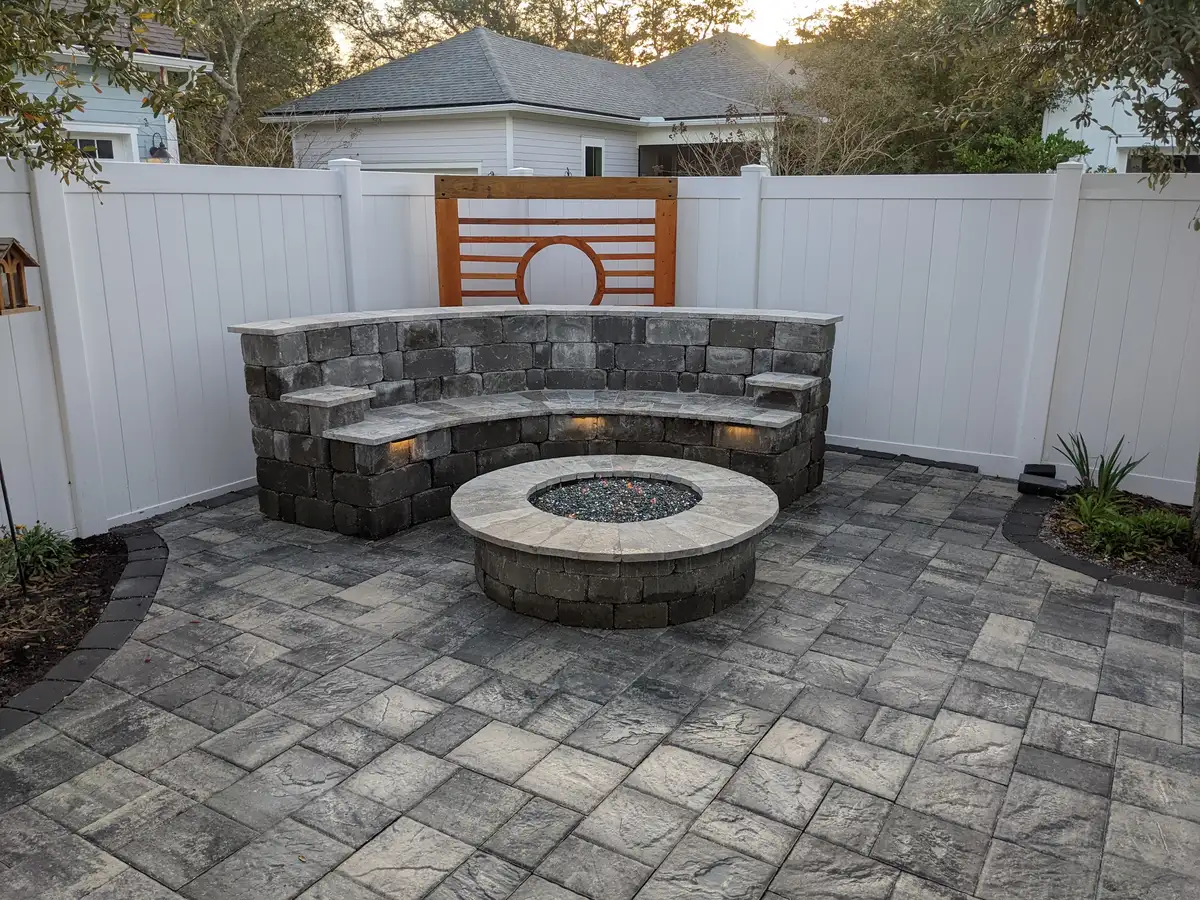
Bloom and Stone's published planning range for a custom natural stone fire pit is $5,000 to $15,000. Fire tables generally range from $8,000 to $20,000. Outdoor fireplaces typically start around $15,000 and can exceed $35,000 when the design includes more substantial masonry, chimney work, or connected seating.
Those figures are a useful starting point, not a quote for every yard. Fuel type, gas access, site preparation, stone selection, seating, drainage, and construction access all affect the final scope. A detailed estimate for custom fire pit installation should explain those choices clearly.
Start with the type of fire feature you want
The first budget decision is not the finish color. It is the kind of experience you want and how much structure the feature requires.
- Custom stone fire pit: $5,000–$15,000. This range can cover a purpose-built masonry feature, its fire-rated interior components, and the site work needed for the chosen location. Size, stone, burner or ring, and the surrounding surface shape the total.
- Fire table: $8,000–$20,000. A fire table combines flame with a table-height or lounge-height surface. Linear burners, gas components, controls, stone tops, and a tailored base generally create a more detailed assembly.
- Outdoor fireplace: from $15,000 to $35,000+. A fireplace adds vertical masonry, a firebox, venting or chimney components, structural considerations, and often a larger patio or outdoor-room composition.
A freestanding store-bought unit is a different product category from these custom installations. Comparing the price of a portable bowl with a built-in stone feature does not account for base preparation, fuel infrastructure, fire-rated components, permanent masonry, or integration with the surrounding patio.
What moves a fire pit quote up or down?
Two installations with the same outside diameter can carry different costs because much of the work is below, inside, or around the visible fire ring.
- Wood, propane, or natural gas. A wood-burning pit avoids a permanent gas line, but it still needs appropriate clearances and a fire-safe assembly. Gas can add burner equipment, controls, supply-line work, licensed trade coordination, and inspection requirements.
- Stone and masonry detail. Material cost, cap selection, curved cuts, pattern, wall height, mortar work, and matching an existing patio all affect labor and waste.
- Base and drainage. Sandy or disturbed soil, standing water, roof runoff, and the intended finished elevation may require different excavation, compaction, grading, or drainage work.
- Patio and seating scope. A fire pit alone is a smaller project than a complete conversation area with pavers, a curved seat wall, steps, planting, or lighting.
- Access and removal. A direct equipment route is different from carrying materials through a narrow side yard, working around mature trees, or removing an old slab or landscape feature.
- Placement and approvals. Clearances from structures, overhead branches, property lines, and combustible materials may influence the layout. Municipal, county, HOA, gas, or insurance requirements can also affect the process.
Ask what the proposal includes for excavation, base preparation, fire-rated components, fuel connections, stone or pavers, drainage, seating, lighting sleeves, cleanup, permits, inspections, and restoration around the work area.
Gas versus wood: compare the whole installation
Gas appeals to homeowners who want quick ignition, adjustable flame, and less ash cleanup. The construction budget can rise if the proposed location is far from an available supply or if new propane storage, piping, controls, and licensed trade work are needed. The design also has to account for ventilation and access to serviceable components.
Wood offers the sound and scent of a traditional fire and may avoid fuel-line installation. It also creates smoke, sparks, ash, and wood-storage needs. Placement, wind, overhead vegetation, neighbor proximity, and current burn restrictions deserve careful attention. The lower-cost fuel setup is not automatically the lower-maintenance choice.
When comparing options, ask for both schemes to use the same patio size, masonry finish, and seating plan. That makes the fuel-system difference easier to see without confusing it with a larger overall design.
Fernandina Beach site conditions that affect planning
In Fernandina Beach and nearby coastal communities, sandy soil, summer rain, salt exposure, mature tree roots, and narrow side-yard access can all shape the installation. They do not create one standard surcharge. They are site conditions to inspect before deciding where the fire feature and surrounding patio should sit.
Drainage is especially important when the fire pit is part of a new paver area. The layout should move water away from the house and keep the gathering area comfortable after heavy rain. Existing irrigation, utilities, roof runoff, thresholds, and low spots belong in the same conversation as stone and burner style.
Local rules also depend on the address and the feature. A portable wood-burning pit, permanent masonry pit, gas-connected fire table, and outdoor fireplace may not follow the same approval path. Check current city or county requirements, HOA restrictions, utility coordination, and temporary burn restrictions before construction begins.
How to set a realistic budget before requesting a quote
You do not need every finish selected before the first conversation, but a few decisions make the estimate more useful:
- Choose whether you are comparing a fire pit, fire table, or outdoor fireplace.
- Decide whether convenience or a traditional wood fire matters more to you.
- Identify the preferred location and how many people you want to seat comfortably.
- Note whether the project includes a new patio, seat wall, steps, planting, or landscape lighting.
- Share known access limits, drainage concerns, utilities, HOA rules, and existing gas or propane service.
Then compare proposals by complete scope, not only the bottom-line number. A lower quote is not equivalent if it excludes the patio base, fuel work, drainage, fire-rated components, edge restoration, or required approvals shown elsewhere.
Common QuestionsFire pit installation cost FAQ
A national average can combine portable products, kit installations, and fully custom masonry, so it is not a dependable number for a specific yard. Bloom and Stone's published planning range for a custom natural stone fire pit is $5,000 to $15,000. Fire tables generally range from $8,000 to $20,000, while outdoor fireplaces typically start around $15,000 and can exceed $35,000. A site visit and defined scope are needed for a project quote.
Often, yes, but the answer depends on the exact site, fuel type, municipality, county rules, HOA restrictions, clearances, and any temporary burn restrictions. Permanent masonry and gas-connected features may involve permits or inspections. Confirm the current requirements for your address before finalizing the design.
It can be when the project requires a new gas or propane supply, licensed trade coordination, controls, ventilation, and inspection. The masonry and seating scope also matter, so fuel type alone does not determine which complete installation costs more.
A thoughtfully placed fire pit can make an outdoor area more inviting and useful, but there is no guaranteed resale return. Value depends on design quality, condition, buyer preferences, local demand, and how well the feature fits the rest of the yard.
Yes. Coverage and notification rules vary by carrier and policy. Share the proposed fuel type, location, and whether the feature is permanent so your insurer can explain any applicable conditions before construction.
Get a site-specific fire pit estimate
Tell Bloom and Stone how you want to use your yard, which fuel type you are considering, and whether the fire feature should connect with a patio, seating wall, planting, or lighting plan.